
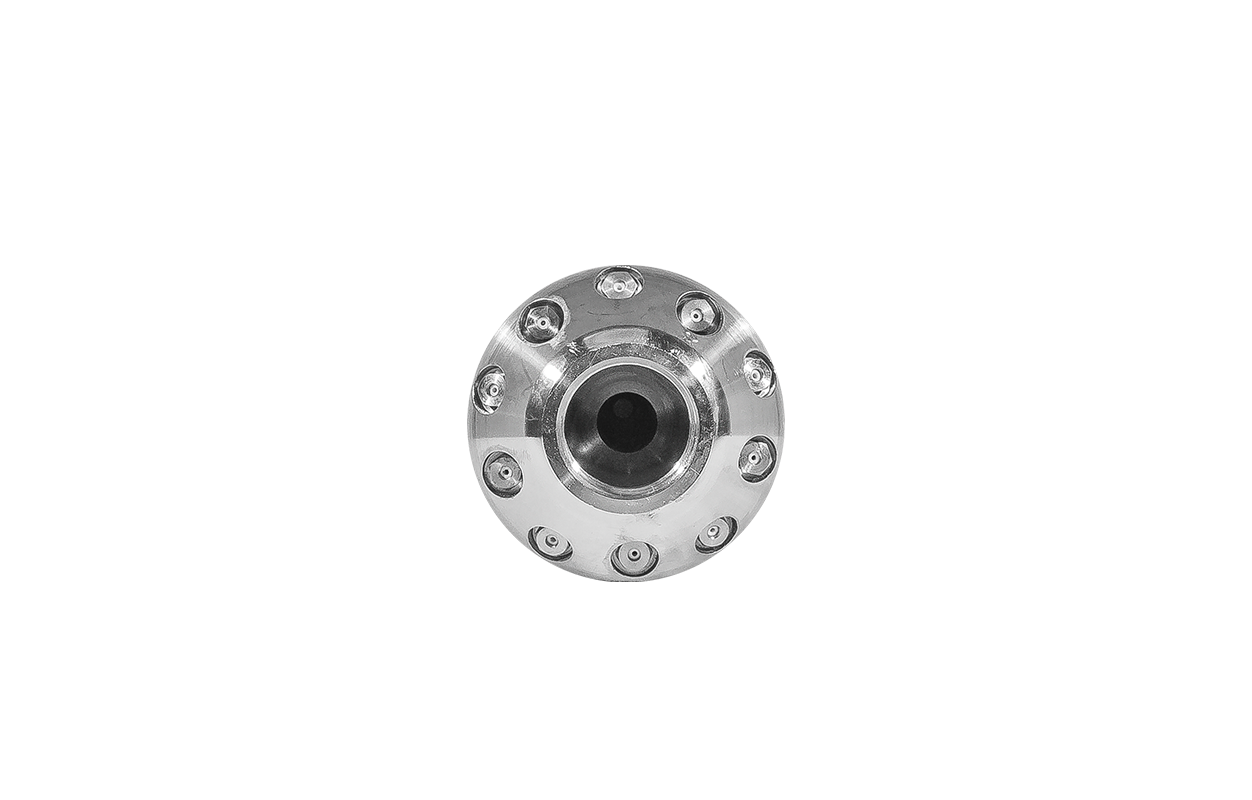
As you may already know, a nozzle is a component fitted to a downpipe that ejects high-pressure water jets through the inside of pipes to ensure proper maintenance and cleaning. It is a key element within drainage systems, as without the regular flushing of debris from inspection chambers using high-pressure water, blockages in downpipes would become far more frequent and problematic. Depending on the maintenance requirements of the pipe system, as well as its dimensions and material properties, some types of nozzles will be more suitable than others.
All types of nozzles: find the right one for you
All nozzle variants can be classified according to the section of pipe where they are used or their level of specialisation.
There are two types of general-purpose or cleaning nozzles: one with multiple rear jets for basic maintenance, and another that includes a front jet in addition to rear jets angled at 7 degrees, which is more effective for removing sand, soap residue or limescale, as the front jet helps to break through deposits.
Another group consists of technical or high-efficiency nozzles, such as Anaconda nozzles, used in installations with bends of more than 45º in inspection chambers. These work similarly to cleaning nozzles but feature a front jet angled at 30º.
Rotating or spinning nozzles are especially useful when the internal pipe walls are heavily soiled, as they help remove stubborn deposits and can also cut through roots. They operate in a fan-shaped pattern and typically feature two front jets and one rear jet.
Finally, among the different types of nozzles, pulling and final cleaning nozzles have a much higher flow rate than the others, using eight rear jets to fully flush and remove all remaining debris from the pipe.